
How to choose or take the Best Photos for a Watercolour Pet Portrait Commission

When someone gets in touch to ask "how do I commission a watercolour portrait of my pet?", one of the first things I ask for is photos — usually a few of them. I am often asked what sort of photos I need, and how to photograph your pet for a custom pet portrait.

Above all else, the most important thing is that the photo is in focus. Hopefully that goes without saying! Your photo of a blurry blob might mean something to you, but it is going to be really difficult for me to create a hand painted pet portrait for you if the reference isn't right.
Send me a few pictures with your pet in different poses. I need to be able to see the face as clearly as possible, and see the colour of the fur accurately. If you have a photo with a great pose but the colours don't look quite right, that's fine — I can use the other photos to figure it out.
Ideally a photo taken at eye level with the animal is perfect. But if you have the perfect goofy photo that's full of character, that might work too.
Try to avoid photos that are full flash, taken in very bright sunlight, too dark, blurry, or shot from too far away. I'll always tell you honestly if something isn't going to work — that conversation is much better had at the start than further down the line.
If you only have one photo — especially for a memorial portrait — please send it anyway. I will always look, and I'll always be honest about what's possible.
When you send me your photo, please try not to send me a screenshot, or save the photo from social media - they likely won't be suitable. For best results, the original photo, or a good scan of an original printed photo, work best.
Curious about why these things matter — and what's actually going on when I look at a photo? Read on…
When you commission a painting from a photo, a good photo matters!
Have you heard of aphantasia? People who have it can't visualise in their mind's eye. That's me! When I close my eyes, there is no image there — just darkness. So a great reference photo is pretty important to me so that I can do the best job possible.
Your photo is my window to your animal companion. It's how I connect with them, their character and their energy. Because I often see more than many people do - the colours reflected in the fur, the particular colours of the shadows, the places where the coat reflects and refracts the colours of the environment and gives it life. I also feel the essence of the animal, like they come and sit with me and have a chat whilst I paint them, and help the image form on the paper.

Roxie, looking picture perfect. 
Roxie, looking very goofy 
Olive, on the prowl 
Olive, looking very fluffy!
All of that starts with what's in the photograph. So here's a little more about what I'm looking for, and why.
It All Starts With the Eyes
Every portrait I paint begins with the eyes. They're the window to the soul, and where I start to feel who this animal is - and it's often the first thing you look at whenever you look at your pet, or a photograph of your pet, which is why they're so important. They give us that connection - even if an animal is blind, or has had them removed for medical reasons, it's still the place we look, because the connection is more than visual - it's about your bond and the love that your pet is radiating to you.
I love to see the colour of their eyes - so if they're squinting into the sun or hidden in shadow, it can be tricky to connect. There are always exceptions to the "rules" though (and I am of the opinion that rules are made to be broken!) - for example, if your animal has an adorably floppy trademark fringe, or is crinkling their eyes as they're catching a treat.
The Right Angle

The right angle is, firstly, the one that shows me who they are and is a good visual representation - traditionally a portrait photograph would be taken at eye level with the animal.
However...
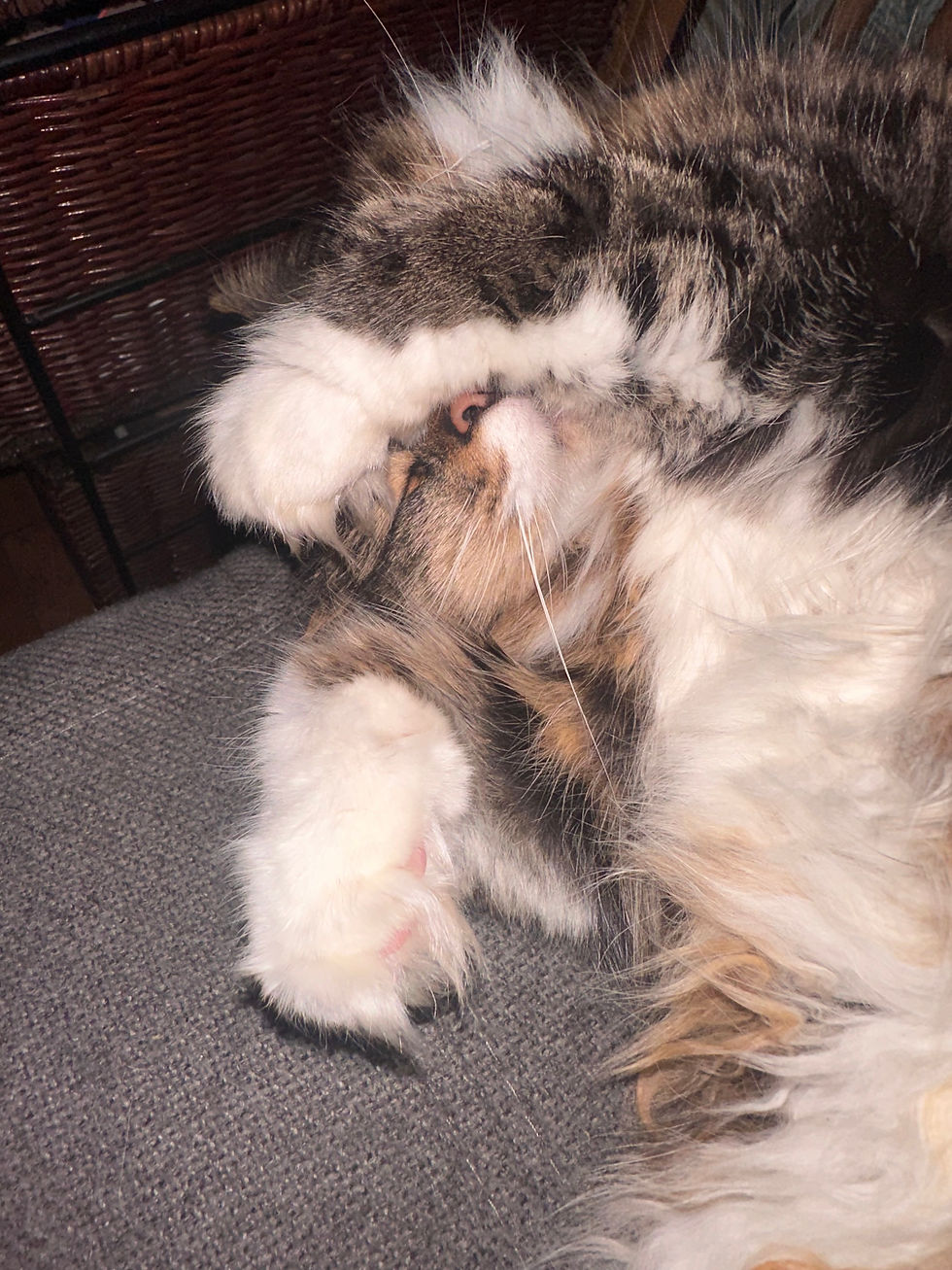
I like to break the "rules"! If you have a photo of your pet mid-sneeze, caught in a moment of pure undignified joy, belly up and rolling in the grass — please send it. Some of my favourite paintings have come from photos that are at odd angles or perspectives. For example, this watercolour cat portrait of Leo, the Bengal - the perspective of this photo and the way Leo was snuggled into the duvet made for the perfect memorial portrait gift.

Roxie, looking picture perfect 
Roxie, sending love 
Olive, looking quizzical
The above images are so full of character, love - and most importantly, detail.

Roxie, walking towards me through the grass and licking her nose 
Roxie with her lip stuck on her teeth Roxie, looking very goofy
Whilst the above photos might not be "picture perfect" - they are quirky, and can sometimes work well as a pet portrait!

The top of Roxie's head 
Roxie, after destroying one of her favourite toys 
Roxie's butt 
Merlin, giving us the razzle dazzle and working his best angles
Hopefully you'll agree, that these are all pretty terrible pet photographs!
A Note on Light and Dark Animals
Both ends of the colour spectrum have their quirks when it comes to photography.

Dark animals can dissolve in low light (like my void cat!) — the detail in the coat disappears and you're left with a shape rather than a subject. A light, bright background helps with contrast, and the golden hour — that soft light an hour or so after sunrise or before sunset — is genuinely brilliant for dark coats, catching the edges and contours in a way that flat midday light won't.
Light-coloured animals have the opposite problem: they can appear bleached in bright conditions, and the detail in a pale coat simply won't register in the photograph. A bright overcast day is often ideal here — the light is even, the colours are accurate, and you avoid the harsh shadows that strong sunshine creates.

RULE BREAK! Strong flash or shadows can also create drama which can be so much fun!
However, some of the loveliest photos take advantage of natural diffused light. TOP TIP: for natural diffused light, hang a white sheet over your brightest sun-facing window, and have a little photoshoot with your pet and their favourite toys and treats. For some more resources on taking great photos of your pets, check out the following:
What If You Only Have One Old Photo?
This is more common than you might think, especially for memorial portraits.
Please send what you can, ideally by scanning the photo on a flatbed scanner - if you take a photo of a photo, invariably the angle will be wrong and there will be light bouncing off the surface, making the photo harder to work with. I will always be honest with you about what I can and can't work with, but I've painted portraits from imperfect, old, and much-loved photographs many times, and I will always try to find a way, especially when the photograph is all that remains. What I'm looking for isn't necessarily perfection. It's enough light in the eyes, enough of their face, enough of them — to feel my way into the painting.
The single photo that makes your heart catch, the one where they were entirely themselves, will almost always serve better than anything posed or staged.
A Quick Summary
Natural light is your best friend. Near a window, overcast days, soft and front-facing.
The eyes are the windows to the soul - and the first thing we often look at. I really love painting the love that your pets reflect back at you with their eyes.
Avoid backlighting and heavy shadows — these genuinely make my job difficult.
Flash isn't automatically a problem — if the photo has life in it, send it.
Goofy, characterful, chaotic photos are very welcome. Dignity is optional.
For dark animals, look for the light catching the edges and contours of their coat.
If you only have one photo, send it. I will always try.
BUT ALSO - break the rules! Sometimes a photo works even if it doesn't meet ANY of these criteria. I will work with you to find the perfect image.
Your photo matters more than almost anything else in the commission process — not because I need everything to be perfect, but because it is a representation of your pet's love and character. When the photograph is right, bringing them to life on the page in watercolour is a joyful experience with an equally joyful outcome.
Are you ready to commission a painting? Let's talk!

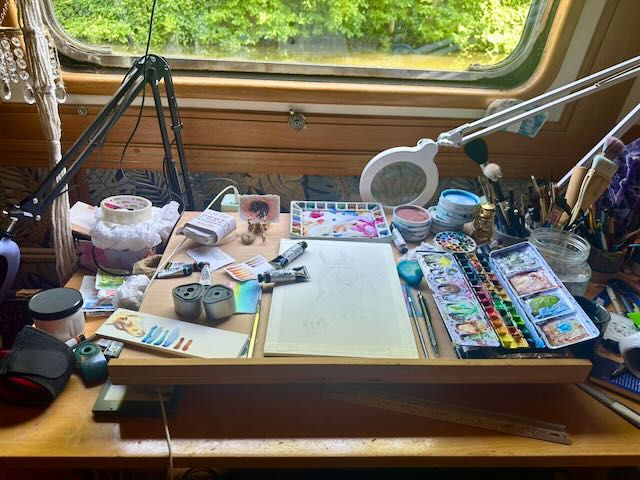
Tracy Christina is a UK watercolour artist working from her widebeam boat on the canals. She takes commissions for pet portraits, memorial portraits, wildlife and human subjects — painted from your photographs, with care.



Comments